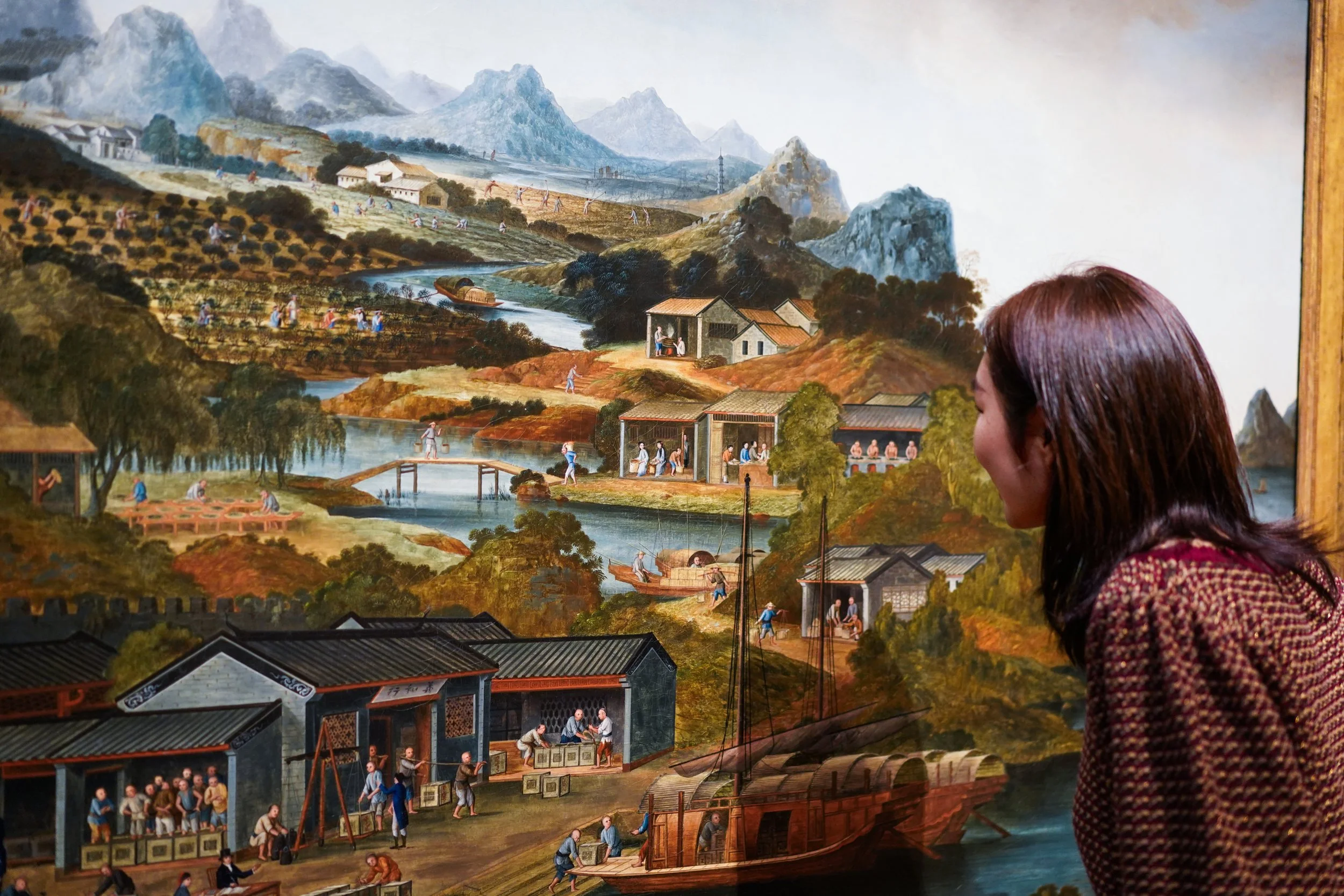
Visual Thinking Strategies
through Asian Art and contemporary design
See More. Think Together. Lead Better.
Most corporate training tells people what to think. This one changes how they see.
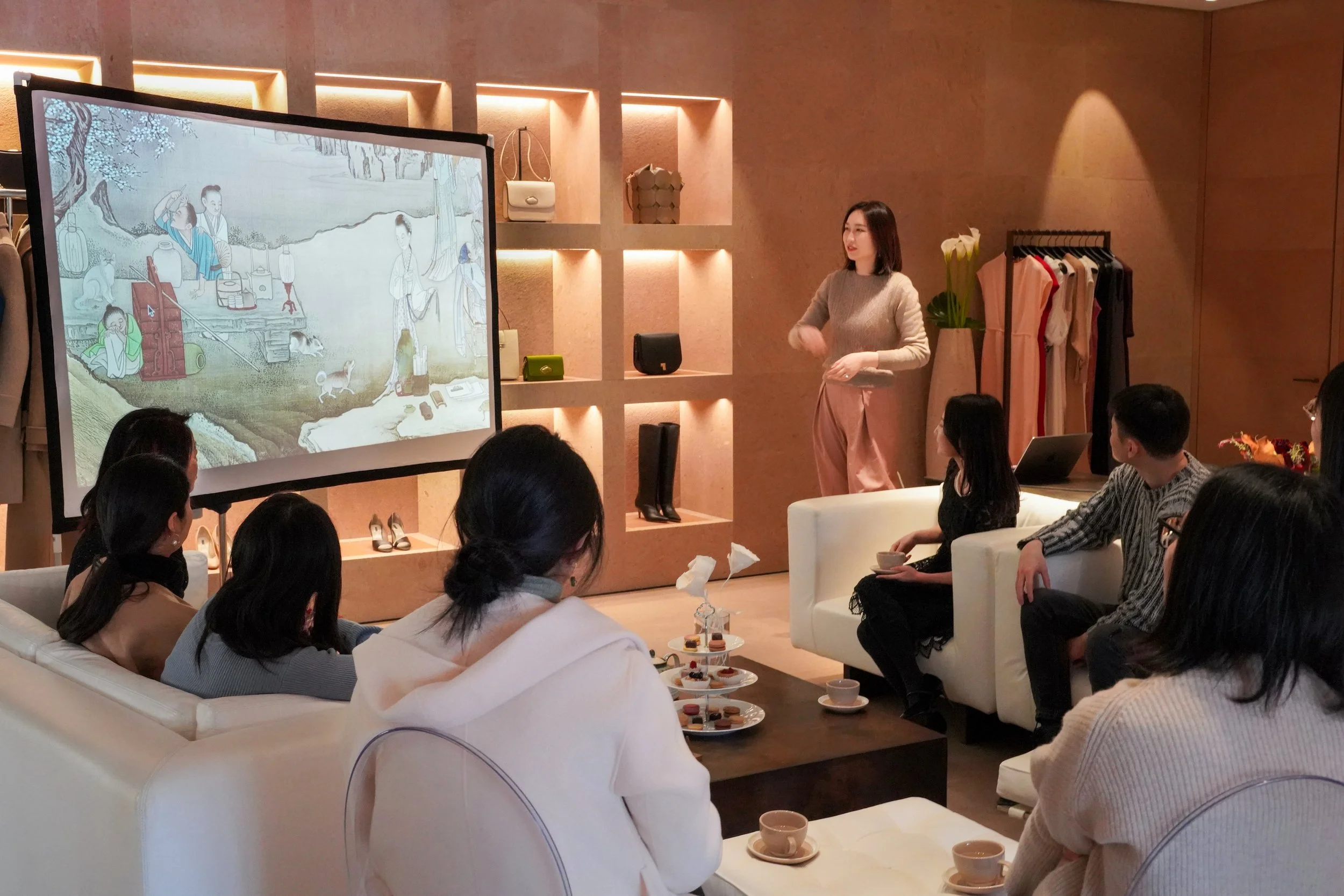
Visual Thinking Strategies (VTS) is a structured facilitation method built around close looking and open dialogue . It was originally developed for museums, now adopted by leading organizations for leadership development, team communication, and cross-functional alignment.
At SAWY, we practice VTS through a curated selection of Asian Art and Contemporary Design Works, from classical ink landscapes and court paintings to modern graphic illustration and visual storytelling. The lens is intentional: these are images that reward looking, that hold complexity, that resist easy summary. When no one in the room is the automatic "expert," every voice carries equal weight. That's where real conversation begins.
What This Solves
Most teams know they may have a listening problem. Few know that the fastest way to fix it is to teach people to see. The symptoms are familiar:
conversations that move too fast to catch what's actually being said
decisions made before all perspectives are in
feedback that lands wrong because no one stopped to look carefully first
VTS slows the room down in the best possible way. Three deceptively simple questions — What's going on here? What do you see that makes you say that? What more can we find? — consistently surface the kind of dialogue that expensive offsites rarely do: people with different roles, backgrounds, and communication styles arriving at genuine insight together.
The method works because it removes the hierarchy of expertise. A VP and a new hire are looking at the same image, with equal claim to what they notice. It is a way to build real empathy.
Where It Fits in Your Organization
VTS is not only a team-building experience. It's a facilitation tool that can be inserted into real business moments:
Leadership development — building the listening and dialogue habits that define effective leaders
New employee onboarding — creating shared language and psychological safety from day one
Cross-functional alignment — giving teams with communication friction a neutral ground to practice seeing the same thing differently
Project retrospectives — training teams to slow down and examine what others missed
Strategy cascades — making abstract direction tangible, discussable, and memorable
DEI and cross-cultural programs — fluency through shared looking, not lecture
Client hospitality — a sophisticated, conversation-generating experience that stays with people long after the event
What Your Team Gains
For the individual Sharpened observation · More generous listening · Comfort sitting with ambiguity
For the team Stronger cross-functional dialogue · Reduced communication friction · Psychological safety built through genuine shared experience
For the organization An experiential program that supports DEI, leadership, and culture goals simultaneously · A session people will still be referencing next quarter
Why Eastern Art and Contemporary Design
Neither topic comes with a ready opinion. That's the point. When a team gathers around something unfamiliar, the usual dynamics dissolve. There is no expertise to perform, no position to defend.
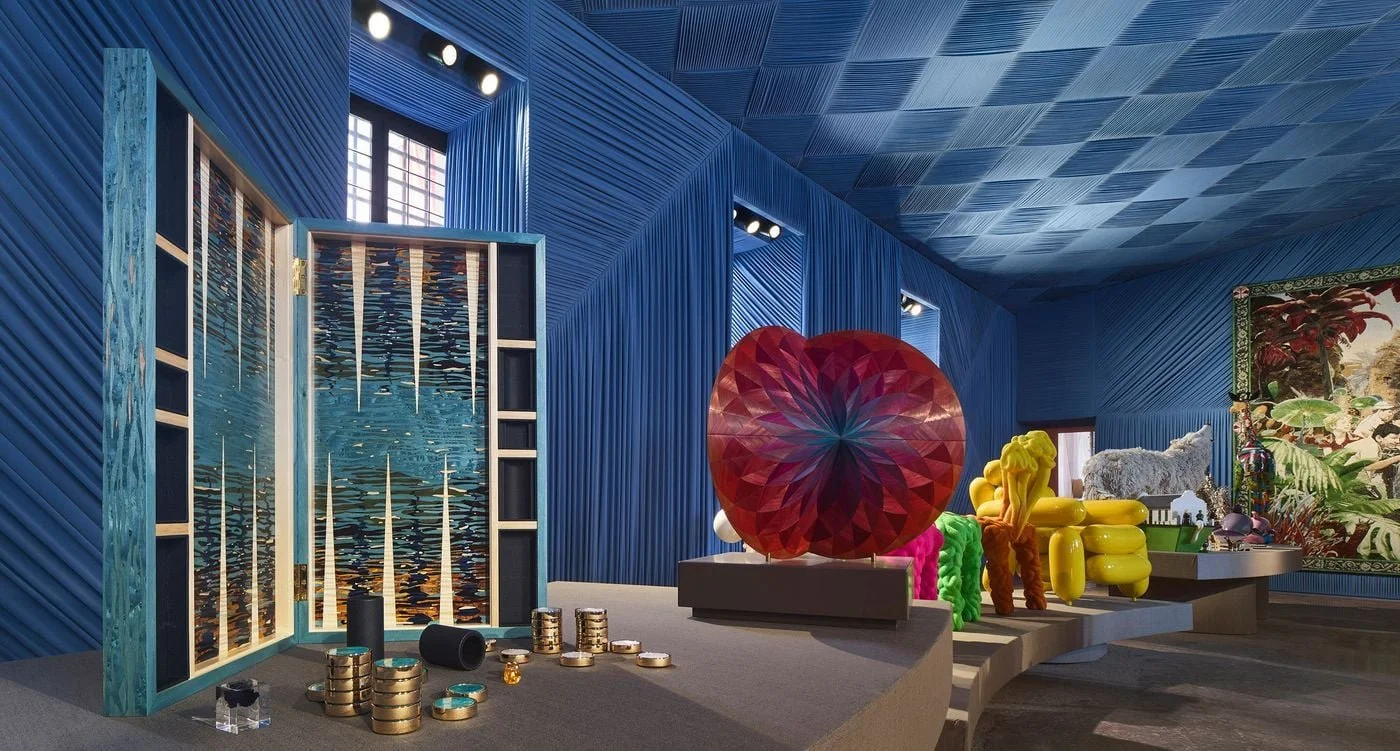
Classical Chinese aesthetic philosophy understood this. To see was never passive. Looking was an act of sustained internal inquiry, not reception. VTS inherits this tradition. Its trains people to slow down, to look before they conclude, to stay in the uncertainty long enough for something real to emerge. Contemporary design works by the same discipline. Every object, interface, and space that shapes our daily lives is the residue of a long process of observation, rejection, and refinement. Most people experience only the result. This program teaches participants to read the process, to look at a designed thing and trace the decisions embedded in it. That kind of attention is rare and also transferable.
Format & Logistics
Delivery · In-person · Virtual · Hybrid
Group Size · 4–40 in-person · Up to 100 virtual · Ideal: 10–20
Duration
30 min — One image, one conversation, a taste of the method
1.5 hrs — Two works, facilitated debrief, full arc
Half-day — Three sessions, thematic arc, team reflection
Series — 4–6 sessions over weeks or months, building sustained visual literacy
Add-ons
Curated art print for each participant · Written reflection guide · Artwork selection customized to your company theme, values, or industry
Most sessions book 3–6 weeks out.

SIGNATURE EXPERIENCES
Perception, presence, self-knowledge, vitality. The four foundations of effective leadership, each explored through a different Eastern practice.